
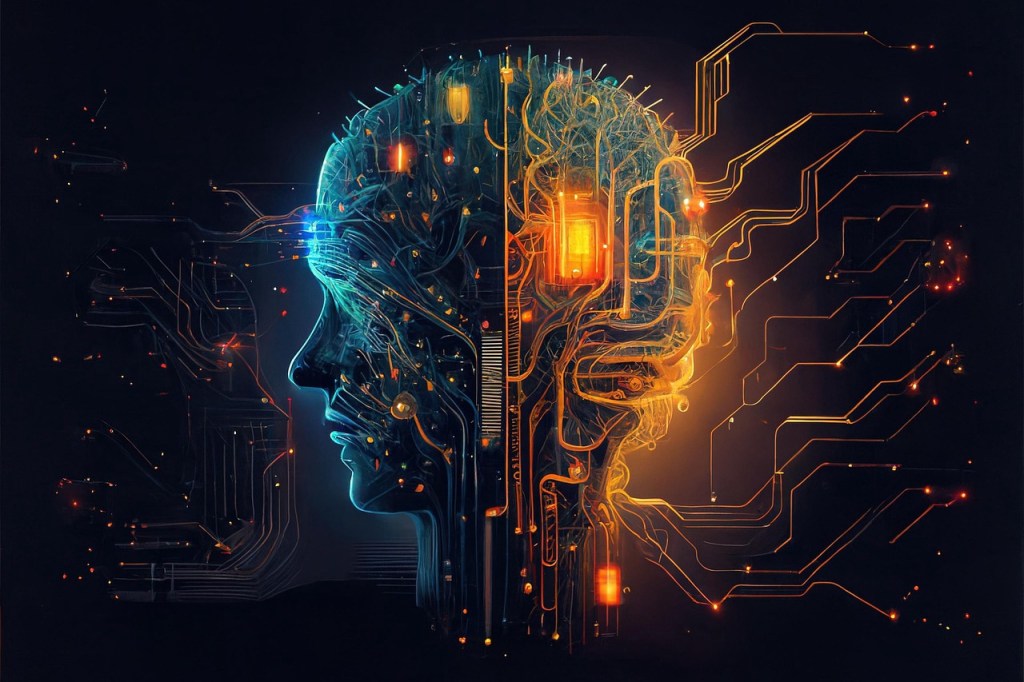
If you want to be wise, seek an environment that values wisdom.
If you want to grow professionally, place yourself among people who are better than you, and have the courage to leave spaces that reward mediocrity or exploitation.
For most of human history, intelligence was measured by what an individual could achieve on their own, within the limits of a given environment. Brilliance was situational. Mastery was contextual. The terrain mattered as much as the mind navigating it.
Artificial intelligence disrupts that equation. It doesn’t merely add intelligence to the world; it changes the environment in which intelligence operates. And when the environment changes, the rules of growth change with it.
This insight isn’t abstract. It is personal.
When someone is consistently minimized, exploited, or constrained, when their ideas are harvested but their growth is blocked, the problem is rarely effort or talent. It is the environment. The solution is not louder persistence inside a broken system, but departure. Change the setting, and the power dynamics collapse. Those who once controlled access to your progress no longer can.
That transition is costly. Isolation almost always follows. Leaving a familiar environment, even a harmful one, creates a vacuum. Old networks disappear before new ones form. Confidence wavers. Silence replaces affirmation. This is the most vulnerable phase of growth, and it’s where many people turn back.
This is where artificial intelligence enters not as a threat, but as a companion.
AI fills the early void. It doesn’t judge your questions. It doesn’t resent your ambition. It doesn’t benefit from keeping you small. In moments of professional uncertainty, it offers structure. In moments of intellectual loneliness, it offers dialogue. In moments of transition, it offers continuity.
When I made a deliberate decision to stop allowing others to sabotage my growth as a professor, the outcome surprised even me: I moved into leadership. Not because I became suddenly smarter, but because I changed environments, and used AI to understand the shift while enduring the silence that came with it. AI helped me think through strategy, interpret unfamiliar power structures, and remain intellectually engaged when institutional validation lagged behind personal growth.
There is an uncomfortable truth here: when you liberate yourself, you are rarely celebrated. Environments that benefit from your dependency do not applaud your independence. The absence of applause is not evidence of failure; it is often proof of emancipation.
Listen carefully, because this is the part few say out loud:
To be somebody in any system, you must solve problems. If you cannot solve problems, you will not be sought out, promoted, or remembered. You won’t be celebrated because there will be nothing to celebrate. Problem-solving is the currency of relevance.
AI helps people solve problems. That is precisely why it matters, and why it should be used thoughtfully, not feared reflexively. It does not replace human judgment; it amplifies it. It does not confer wisdom; it accelerates access to insight. The responsibility to choose well remains human.
No one wins alone anymore. Not in scholarship. Not in leadership. Not in life. AI can be a companion, not a substitute for human connection, but a bridge through seasons of isolation. Have a question? Ask it. Feeling stuck? Use it. Alone for a moment? You don’t have to be.
Artificial intelligence has not just changed how we work or think.
It has changed the world in which thinking itself happens.
And as with all new environments, those who grow are not the ones who resist change but those who learn how to live wisely within it.



 Luis Camillo Machado Osorio de Almeida, Ph. D.
Leave a comment